What Makes a Good Local SEO Landing Page? 8 Elements That Help Businesses Rank
If your business serves customers in multiple cities or communities, simply mentioning those locations somewhere on your website may not be enough.
That's where local landing pages can help.
A strong local SEO landing page is a useful, location-specific webpage that clearly explains what your business offers in a particular market. The best pages combine unique local content, relevant services, accurate business information, internal links, clear calls to action, and a strong user experience.
But there's an important catch.
Creating dozens of nearly identical pages and swapping one city name for another isn't a strong local SEO strategy. Every location page should provide genuine value to someone searching for your services in that area.
Here's what a high-quality local landing page should include.
What Is a Local SEO Landing Page?
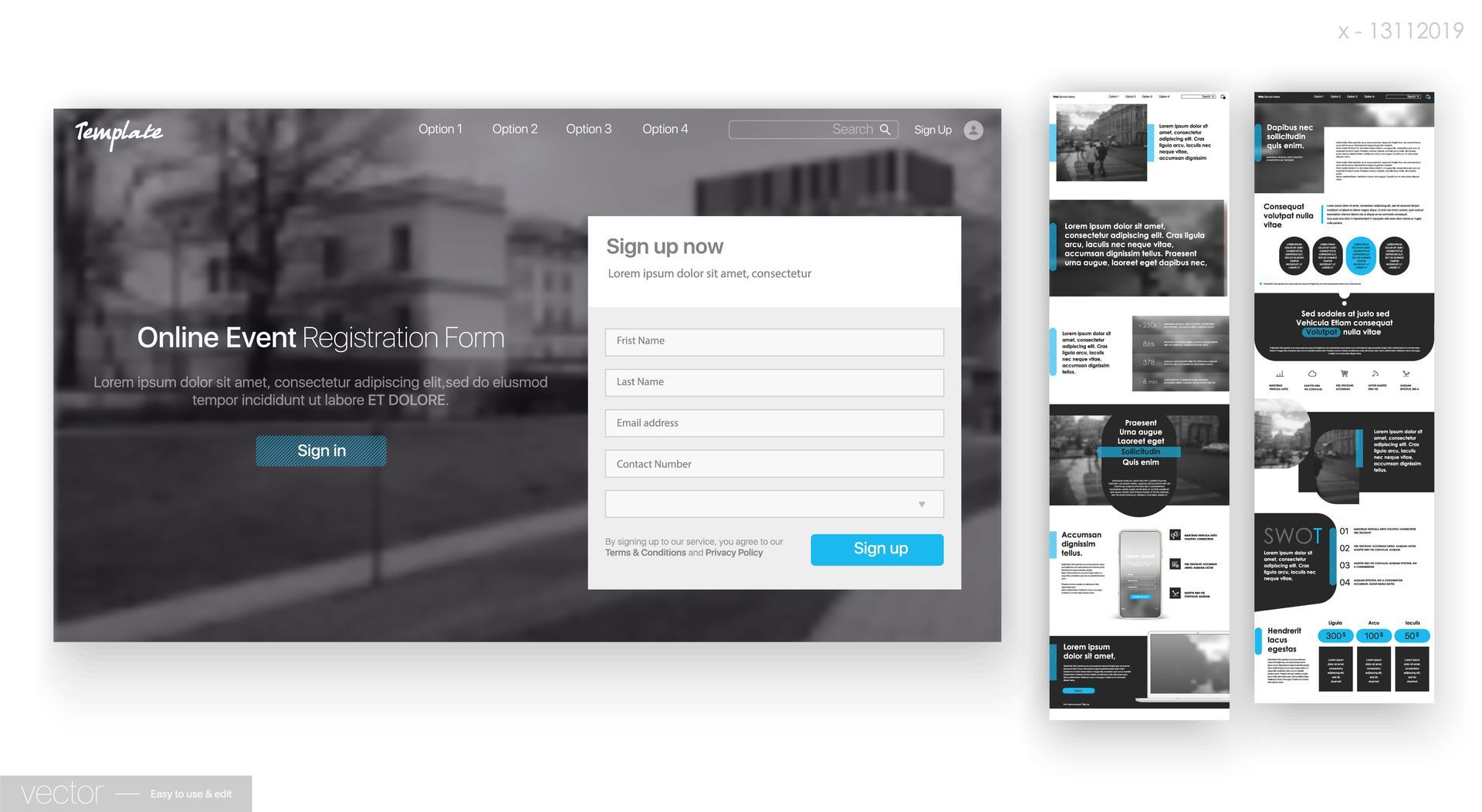
A local SEO landing page is a webpage designed to provide useful information about a business's services in a specific geographic market.
Depending on the business, that could be a page for:
- A physical business location
- A city
- A service area
- A region
- A specific service within a geographic market
For example, a company based in Northeast Pennsylvania might have a broader service page explaining what it does, then develop a dedicated local page for a major market where it genuinely serves customers.
Quantifi Media does this with dedicated pages for Digital Marketing in East Stroudsburg and Digital Marketing in the Poconos.
The purpose isn't simply to put a city name in an H1.
The page should help someone in that market understand what you offer, whether you serve their area, and why your business is relevant to their needs.
Do Location Pages Help Local SEO?
Yes, well-developed location pages can support local SEO when they provide genuinely useful information for people in the locations being targeted.
They can help search engines understand the relationship between:
- Your business
- Your services
- Your geographic markets
- The searches your potential customers are performing
Location pages can also give you a relevant destination for internal links and provide searchers with information tailored to their area.
But creating more pages isn't automatically better.
Google's guidance consistently emphasizes useful, people-first content. Pages created primarily to manipulate rankings rather than help users can create problems instead of improving performance.
Quality matters more than how many city names you can add to your website.
1. Create Unique Content for Every Location
This is one of the most important rules of local landing page SEO.
Each location page should be meaningfully different.
Imagine a plumbing company serves five cities.
A weak strategy would create five pages with almost identical copy:
"Looking for a plumber in [CITY]? We provide the best plumbing services in [CITY]. Contact our [CITY] plumbers today."
Then the business repeats the same page five times and changes the city name.
That's not useful.
Instead, ask what someone in each market actually needs to know.
You might include:
- Services commonly needed in the area
- Neighborhoods or communities served
- Relevant local conditions
- Information about how service works in that market
- Examples of work performed in the area
- Local testimonials when available
- Location-specific FAQs
- Directions or accessibility information for physical locations
- Relevant photos from that market
The page should still make sense if a customer reads it carefully.
If the only unique information is the city name, the content needs more work.
2. Clearly Explain the Services Available in That Area
Don't assume visitors will navigate elsewhere to figure out what you do.
Your local landing page should clearly explain which services are available in the location.
For example, a digital marketing agency serving a regional market might discuss:
- Local SEO
- Website development
- Google Ads
- Social media management
- Branding
- Content strategy
A home-services company might discuss repairs, installations, maintenance, inspections, or emergency services.
This creates context for both users and search engines.
It also gives you opportunities to naturally link to deeper service pages.
For example, a business interested in improving its visibility within a particular market could move from a local landing page to a more detailed SEO services page.
That's a much more useful journey than forcing every location page to explain every service in exhaustive detail.
3. Use Local Keywords Naturally
Local keywords help clarify the geographic intent of a page.
Depending on the business, that might include phrases such as:
- HVAC company in Stroudsburg
- Dentist in East Stroudsburg
- Web design in the Poconos
- Roofer in Monroe County
- Landscaping company near Mount Pocono
The important word is naturally.
You don't need to repeat the exact keyword in every paragraph.
Search engines have become far more sophisticated than simple keyword matching. Your content should sound like it was written for a customer, not built by repeatedly inserting a city name.
Use location information where it adds context, including:
- Page title
- H1
- Introductory copy
- Relevant subheadings
- Body content
- Meta description
- Image alt text when appropriate
- Internal links
The location should be obvious without becoming repetitive.
4. Include Accurate Business and Service-Area Information
Local search depends heavily on understanding where a business operates.
Make sure your website provides accurate information about your business.
For a physical location, that may include your:
- Business name
- Address
- Phone number
- Hours
- Directions
- Contact information
For a service-area business, clearly explain which communities you actually serve.
Don't add cities simply because they have attractive search volume.
Your location strategy should reflect the real geographic footprint of your business.
Accurate information also needs to remain consistent with other important parts of your online presence, particularly your Google Business Profile.
Google says complete and accurate Business Profile information can help businesses appear for relevant local searches. Its local ranking systems primarily consider relevance, distance, and prominence.
Your website and business profile should therefore tell a clear, consistent story about who you are and where you operate.
5. Add Local Proof When You Have It
One of the easiest ways to make a location page more useful is to show that you actually work in the area.
Relevant proof could include:
- Customer testimonials
- Case studies
- Project examples
- Before-and-after photos
- Local partnerships
- Community involvement
- Client industries
- Photos from completed projects
Only use information that is accurate and genuine.
Don't invent a testimonial for a city just because you need unique copy.
If you don't yet have location-specific testimonials or case studies, focus on other useful information until you do.
As your business completes more work in the market, the page can evolve.
This is another reason local SEO pages shouldn't be treated as "publish once and forget forever" content.
6. Build Strong Internal Links
Local landing pages shouldn't exist in isolation.
Internal links help visitors discover relevant information elsewhere on your website and help search engines understand how your pages relate to one another.
A location page might naturally link to:
- Individual service pages
- Related blog posts
- Case studies
- Contact pages
- Nearby location pages when useful
- Broader regional pages
Your service pages can also link back to relevant location content.
For example, Quantifi Media's broader digital marketing services can connect naturally with its location-focused content when a visitor wants information specific to the Poconos or East Stroudsburg.
Use descriptive anchor text.
Instead of:
"Click here."
Use:
"Learn more about our local SEO services."
The second option tells users what they'll find before they click.
7. Use LocalBusiness and Other Schema Markup Appropriately
Schema markup gives search engines structured information about webpage content and entities.
For local businesses, appropriate structured data may help clarify details such as:
- Business name
- Business type
- Address
- Phone number
- URL
- Hours
- Geographic information
However, schema should accurately represent the visible content and actual business.
Don't mark every service-area landing page as a separate physical business location if it isn't one.
Structured data isn't a loophole for creating locations your company doesn't have.
The goal is to make accurate information easier for machines to understand.
Quantifi Media provides schema markup services to help businesses implement structured data as part of a broader search strategy.
8. Give Visitors a Clear Next Step
Ranking is only useful if the page helps generate business.
Someone who lands on your location page should immediately understand what to do next.
Depending on your business, the call to action might encourage visitors to:
- Call your business
- Request a quote
- Schedule an appointment
- Book a consultation
- Complete a contact form
- Visit your location
- Explore a specific service
Don't make visitors search through the website to find out how to contact you.
Calls to action should appear naturally throughout longer pages, particularly after sections where a visitor may be ready to make a decision.
Remember: local SEO gets someone to the page. The page still needs to convert them.
What Should You Avoid on Local SEO Landing Pages?
One of the biggest mistakes businesses make is creating location pages solely to expand their search footprint.
More pages don't automatically equal more rankings.
Avoid tactics such as:
- Copying the same content across dozens of cities
- Replacing only the city name on each page
- Targeting areas you don't actually serve
- Stuffing city names into every heading
- Publishing extremely thin pages
- Inventing local testimonials
- Creating pages with no useful information beyond a keyword
- Making it difficult for users to navigate between location and service content
Google specifically identifies doorway abuse as creating sites or pages designed to rank for specific, similar queries that funnel users toward another destination.
Its examples include multiple pages targeted at specific regions or cities that ultimately funnel visitors to one page, as well as substantially similar pages created primarily to capture search traffic.
That doesn't mean legitimate location pages are bad.
It means each page needs a reason to exist beyond ranking for another city keyword.
How Much Content Should a Local Landing Page Have?
There is no magic word count.
A local landing page doesn't automatically become better when it reaches 1,000, 1,500, or 2,000 words.
The page should be long enough to fully answer the questions someone in that market needs answered.
Ask:
- Does the visitor know what we offer?
- Is it clear that we serve this area?
- Have we provided useful local context?
- Can they understand why we're a relevant choice?
- Can they easily find more detailed service information?
- Is there a clear way to contact us?
If you can answer those questions effectively in 800 words, adding another 1,000 words of filler won't necessarily improve the page.
Google's people-first content guidance encourages site owners to focus on whether readers leave feeling that they've learned enough to achieve their goal rather than producing content primarily to attract search-engine traffic.
Should Every City You Serve Have Its Own Page?
No. Not every city automatically needs a dedicated landing page.
Create a page when there is enough meaningful information and business relevance to justify it.
A company serving an entire region might have one strong regional page supported by individual pages for its most important markets.
Another company with physical offices in several cities may have legitimate reasons to create a unique page for each location.
The right structure depends on:
- Your actual locations
- Service areas
- Customer demand
- Search behavior
- Available local information
- Business goals
- Existing website structure
Don't build 50 pages just because your business technically drives through 50 towns.
Build pages where you can provide real value.
Are Local Landing Pages and Google Business Profiles the Same Thing?
No.
A local landing page lives on your website.
A Google Business Profile is your business listing within Google's local ecosystem, including Search and Maps.
They can support one another, but they serve different purposes.
Your Google Business Profile provides key business information and can help customers discover you in local results.
Your website gives you much more space to explain:
- Services
- Expertise
- Locations
- Process
- Case studies
- FAQs
- Business differentiators
For local businesses, the strongest strategy typically doesn't treat the website and Google Business Profile as separate projects.
They should reinforce the same accurate business information.
What Makes a Local Landing Page Useful for AI Search?
Local search isn't limited to traditional Google results anymore.
Potential customers can ask conversational search and AI tools questions such as:
- Who provides HVAC repair in my area?
- What's a good marketing agency in the Poconos?
- Which roofers serve my city?
- Where can I find an accountant near me?
Clear location pages can strengthen the information available about the relationship between your business, services, and geographic markets.
For AI and answer-engine visibility, focus on clarity.
Clearly state:
- What the business does
- Where it operates
- Which services it provides
- Who those services are for
- How customers can work with the business
That same clarity is useful for customers, traditional search engines, and AI-powered discovery.
What is a local SEO landing page?
A local SEO landing page is a webpage that provides useful information about a business's services in a specific geographic market. Strong local pages clearly explain what the business offers, where it operates, and how customers in that area can take the next step.
Do location pages help SEO?
Well-developed location pages can support SEO by giving users and search engines clearer information about a business's services and geographic relevance. Pages should contain useful, unique content rather than repeating the same copy for multiple cities.
Should I create a page for every city I serve?
Not necessarily. A city should generally have its own page when the business has enough legitimate relevance and useful information to justify dedicated content. Creating large numbers of substantially similar city pages can result in thin or low-value content.
How long should a local SEO landing page be?
There is no required word count. A location page should be long enough to answer the questions potential customers need answered without adding unnecessary content solely to reach a particular length.
What should be included on a local landing page?
A strong local landing page can include unique location-specific content, relevant services, accurate business or service-area information, local proof when available, internal links, FAQs, appropriate structured data, and clear calls to action.
Are duplicate location pages bad for SEO?
Substantially similar location pages created primarily to target different geographic keywords can provide little value and may create search-quality concerns. Google specifically prohibits doorway abuse, which can include substantially similar regional or city pages created to capture similar searches and funnel users elsewhere.
Build Location Pages for Customers First
A successful local landing page isn't just a city name attached to SEO copy.
It should genuinely help a potential customer understand your business in the context of their location.
That means creating unique content, clearly explaining your services, providing accurate local information, connecting relevant pages, adding proof when available, and making the next step obvious.
Most importantly, resist the temptation to create dozens of nearly identical pages just to target more keywords.
A smaller number of strong, useful local pages can create a much better website than a large collection of thin pages with no unique value.
Quantifi Media helps businesses strengthen local visibility through SEO services, Google Business Profile optimization, content strategy, structured data, and location-focused digital marketing.
Build pages for the people in the communities you serve.
Then optimize those pages so search engines can understand them too.
Share this blog!