Can ChatGPT Recommend Your Business? How to Improve AI Search Visibility
Search is changing again.
Potential customers aren't only typing keywords into Google anymore. They're asking AI tools questions like:
- "What's the best roofing company near me?"
- "Who can build a website for my small business?"
- "What are the best restaurants in the Poconos?"
- "Which digital marketing agency can help with local SEO?"
Instead of scrolling through a traditional list of search results, these users may receive a direct, conversational answer.
That creates a new question for business owners: Can ChatGPT recommend my business?
It can—but there isn't a button you can press or a special tag that guarantees your company will appear. Improving AI search visibility means making your business easier for search engines and AI systems to discover, understand, verify, and reference.
The good news? Many of the strategies that support visibility in AI search are extensions of strong SEO practices you should already be using.
How Does ChatGPT Find Businesses?
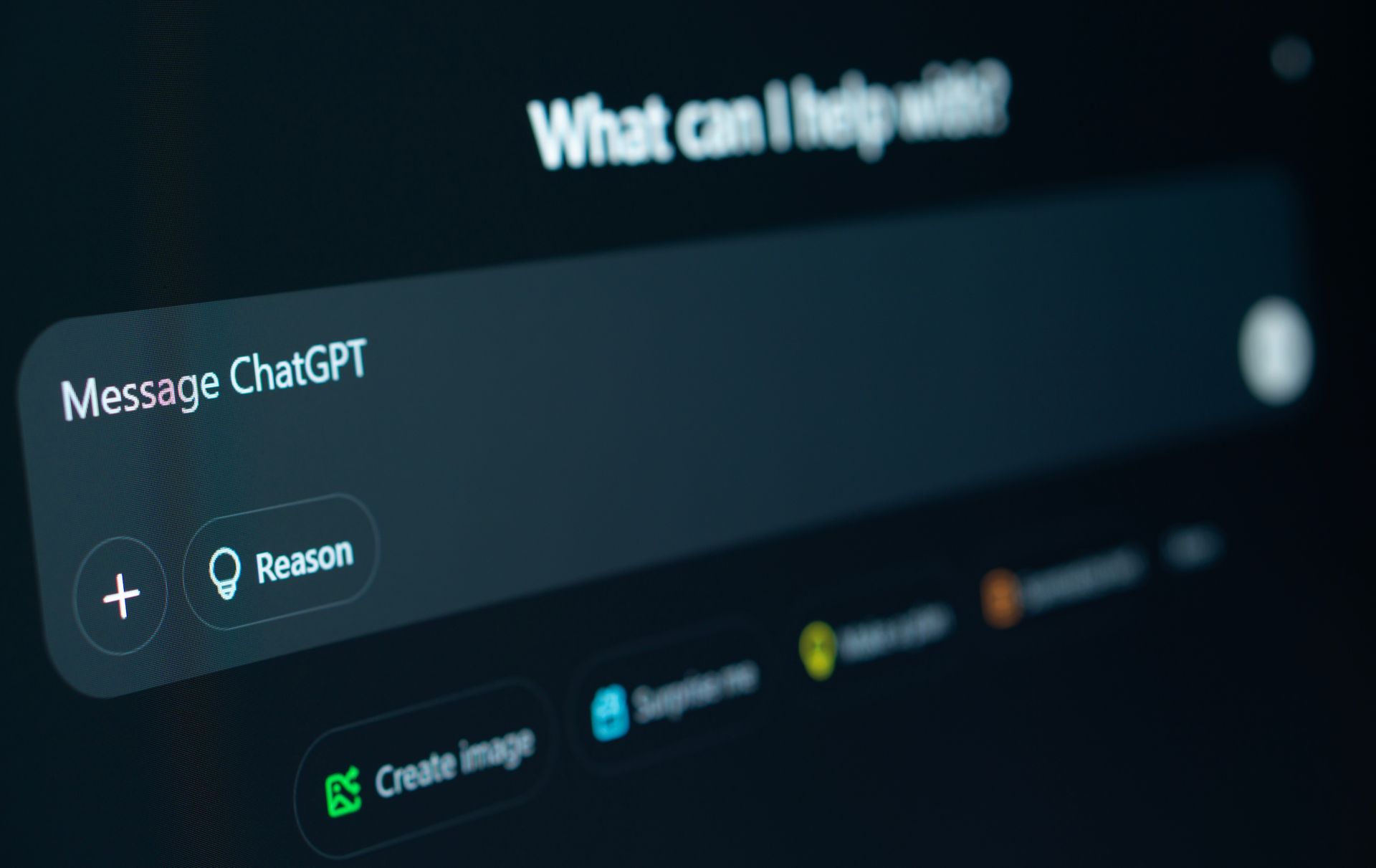
When ChatGPT uses web search, it can access current information from online sources and provide links to relevant websites. That means your visibility isn't based on one factor or a single "ChatGPT ranking."
AI search systems may need to understand several things about your business:
- Who you are
- What you do
- Where you operate
- What services or products you provide
- What topics you have expertise in
- Whether information about your business is consistent
- Whether your website provides useful information related to the user's question
Think of AI visibility less like chasing a single ranking position and more like building a strong digital presence that clearly communicates what your business is known for.
Can You Actually Rank in ChatGPT?
Not in exactly the same way you rank in a traditional Google search.
There isn't a universal "position one" in ChatGPT that every user will see. AI-generated answers can vary based on the question, context, available sources, location, and other factors.
A better goal is to increase the likelihood that your business or website can be discovered, understood, cited, or mentioned when it is relevant to a user's question.
That requires more than adding "ChatGPT" to a few pages on your website.
1. Start With Strong Traditional SEO
Want better AI search visibility? Don't throw away your traditional SEO strategy.
AI search still depends heavily on discoverable, understandable web content. Your website needs a solid technical and content foundation before you worry about the newest optimization trend.
That means paying attention to:
- Crawlability and indexability
- Clear website architecture
- Mobile usability
- Page performance
- Descriptive page titles and headings
- Relevant internal links
- High-quality service and location pages
- Accurate business information
- Helpful, original content
If search engines struggle to crawl or understand your website, AI-powered search experiences may have trouble using it too.
This is why search engine optimization remains an essential part of preparing your website for AI search.
2. Clearly Explain What Your Business Does
Your website shouldn't make people—or machines—guess what you offer.
Each important service should have a clear, dedicated page explaining what the service is, who it's for, how it works, and why someone may need it.
For example, a digital marketing company shouldn't rely on one page that briefly says it offers "marketing." Separate, detailed pages about SEO, paid advertising, website development, social media, and other services create much stronger context.
The same principle applies to local businesses.
If you serve specific geographic areas, your website should make those relationships clear naturally. Accurate service-area information helps both potential customers and search systems understand where your business is relevant.
3. Answer the Questions Your Customers Actually Ask
AI search is conversational.
People don't always enter short keyword phrases. They ask detailed questions and expect useful answers.
That makes customer questions incredibly valuable content opportunities.
A roofing company, for example, might create content answering:
- How long does a roof replacement take?
- How much does a new roof cost?
- What are signs that a roof needs to be replaced?
- Should I repair or replace my roof?
A dentist might answer questions about dental implants, emergency visits, insurance, recovery times, and treatment options.
Your goal isn't to create hundreds of shallow FAQ pages. It's to build useful resources around the questions that matter to your actual customers.
Use clear headings, provide the answer early, and then add enough context to genuinely help the reader.
4. Build Topical Authority
One blog post won't make your website an authority.
If you want your business to become associated with a particular subject, build a connected library of useful information around it.
For example, a company that wants visibility for local SEO might have:
- A comprehensive Local SEO service page
- A Google Business Profile optimization page
- Location-specific service pages
- Blogs answering common local SEO questions
- Case studies demonstrating relevant work
- FAQs addressing common customer concerns
Together, those pages create a much clearer picture of what the company knows and does.
This is one reason strategic content planning matters. Every new page should have a purpose and strengthen a broader topic instead of competing with content you already have.
5. Make Your Content Easy to Understand and Reference
Clear writing isn't just good for readers.
Organized content also makes it easier for search and AI systems to identify the information on a page.
Use:
- Descriptive H2 and H3 headings
- Short, focused paragraphs
- Direct answers to important questions
- Helpful lists when appropriate
- Specific language instead of vague marketing claims
- Relevant internal links
- FAQs when they genuinely add value
Don't bury a simple answer under five paragraphs of filler.
If someone asks, "Does SEO help with AI search visibility?" answer it directly:
Yes. Strong SEO helps make website content discoverable, crawlable, organized, and understandable, thereby supporting visibility across AI-powered search experiences.
Then explain why.
This approach is useful for readers, traditional search engines, answer engines, and generative AI systems.
6. Use Structured Data Where It Makes Sense
Schema markup is structured data that provides additional context about information on a webpage.
Depending on the content, appropriate schema can identify things such as:
- Your organization
- A local business
- An article
- A product
- A service
- An event
- A person
- Breadcrumb navigation
Schema isn't a magic AI-ranking switch. Adding markup doesn't guarantee your business will appear in an AI-generated response.
It does, however, help machines interpret specific information about your content.
Quantifi Media offers schema markup services designed to strengthen the way search engines understand website content and support broader search visibility.
7. Strengthen Your Presence Beyond Your Own Website
Your website matters, but it isn't the only place information about your business exists.
AI systems can draw on information available across the web. That makes a consistent and credible broader digital presence important.
Depending on your business, that can include:
- Business directories
- Industry organizations
- News coverage
- Professional profiles
- Customer reviews
- Social profiles
- Relevant publications
- Local citations
- Authoritative third-party websites
You don't control every mention of your brand, but you can make sure the information you do control is accurate and consistent.
For local businesses, maintaining an accurate and complete Google Business Profile is an important part of that broader presence.
8. Create Content Worth Citing
One of the biggest opportunities in AI search is becoming a source.
Microsoft's AI Performance reporting, for example, now gives website owners visibility into pages that are cited in AI-generated answers and the topics associated with those citations.
So ask yourself: Why would an AI answer reference my website instead of another one?
Generic content gives it very little reason.
Create something genuinely useful.
That could include:
- Original research
- Industry data
- Detailed explanations
- Expert commentary
- Case studies
- Step-by-step guides
- Unique examples
- Firsthand experience
- Frequently updated resources
You don't need to become a national publication. You do need to contribute information that is clear, relevant, accurate, and worth referencing.
9. Keep Your Business Information Current
Outdated information creates confusion.
Review important online information regularly, including:
- Business name
- Address
- Phone number
- Hours
- Service areas
- Services
- Team information
- Website URLs
- Business descriptions
This is especially important for local businesses.
If your website says one thing, your business listings say another, and an old directory contains completely different information, you've created unnecessary ambiguity.
Consistency makes it easier for customers and search systems to understand your business.
10. Don't Chase AI Search Tricks
Whenever search changes, shortcuts follow.
You've probably already seen promises to "guarantee ChatGPT rankings" or secret formulas that supposedly make AI recommend a business overnight.
Be careful.
There is no guaranteed method for forcing ChatGPT or another AI system to recommend your company.
Instead, invest in the fundamentals:
Create excellent content. Build authority. Maintain accurate business information. Strengthen your website. Use structured data appropriately. Earn credible mentions. Answer customer questions better than your competitors.
Those improvements support more than AI visibility. They strengthen your entire digital presence.
SEO, AEO, and GEO: What's the Difference?
As AI search grows, you'll hear more acronyms.
SEO (Search Engine Optimization) focuses on improving website visibility in traditional organic search results.
AEO (Answer Engine Optimization) focuses on structuring and improving content so it can effectively answer users' questions.
GEO (Generative Engine Optimization) focuses on improving how content can be understood, retrieved, and referenced within generative AI experiences.
These strategies aren't mutually exclusive.
A strong modern search strategy considers all three because users now discover businesses through multiple types of search experiences.
How Long Does It Take to Improve AI Search Visibility?
There isn't a universal timeline.
Your results depend on factors including your existing website authority, competition, content quality, technical health, industry, location, and the AI platform being used.
More importantly, AI visibility isn't something you "finish."
Websites change. Competitors publish new content. AI products evolve. Search engines update their systems.
The businesses in the strongest position will be those that continually publish useful information and maintain a technically sound, authoritative online presence.
Can ChatGPT recommend my business?
Yes, ChatGPT may mention or link to businesses when responding to relevant questions, particularly when web search is used. However, appearing in an AI-generated answer is not guaranteed and can vary depending on the query, context, and sources available.
How do I get my business to show up in ChatGPT?
Focus on making your business easy to discover and understand online. Strong SEO, detailed service content, accurate business information, authoritative mentions, useful educational resources, and appropriate structured data can all support your broader AI search visibility.
Is ChatGPT SEO different from regular SEO?
There are differences, but the strategies overlap significantly. Traditional SEO helps search systems discover and understand your website, while AI-focused strategies place additional emphasis on clear answers, topical depth, entity information, authority, and content that can be useful within generated responses.
Can I guarantee that ChatGPT will recommend my company?
No. No legitimate SEO strategy can guarantee that ChatGPT or another AI platform will recommend a particular business. Businesses can improve their visibility and eligibility, but individual AI-generated responses depend on many factors.
Does schema markup help with AI search?
Schema markup provides structured information that can help machines better understand webpage content and entities. It can support overall search clarity, but schema alone does not guarantee inclusion or citations in AI-generated answers.
Do I still need Google SEO if people are using AI search?
Yes. Traditional SEO remains important. Search engines and AI-powered experiences still need to discover, crawl, understand, and evaluate web content. Strong SEO fundamentals therefore support visibility across a broader range of search experiences.
Prepare Your Business for the Future of Search
Customers are gaining more ways to find businesses online.
Google still matters. Traditional SEO still matters. But AI-powered discovery is creating another opportunity to put your company in front of potential customers.
You don't need to abandon everything you've learned about SEO to prepare for that shift.
You need to build on it.
Quantifi Media helps businesses strengthen their online visibility with SEO services, content strategy, local optimization, schema markup, and digital marketing strategies designed for an evolving search landscape.
The way people search may keep changing.
Make sure your business is ready to be found.
Share this blog!