SEO vs. Google Ads: Which Is Better for Your Business?
If you want more customers to find your business on Google, two strategies probably come up again and again: SEO and Google Ads.
So, which one should you choose?
SEO is generally best for building long-term organic visibility, while Google Ads can generate targeted visibility much faster through paid placements. For many businesses, the strongest strategy isn't choosing one over the other—it's using SEO and Google Ads together for different goals.
The right investment depends on your timeline, budget, competition, target audience, and what you're trying to accomplish.
Here's how SEO and Google Ads compare.
What Is the Difference Between SEO and Google Ads?
SEO and Google Ads can both help your business appear when potential customers search online, but they work differently.
Search engine optimization (SEO) is the process of improving your website and online presence to increase visibility in organic search results.
SEO strategies can involve:
- Keyword research
- Website content
- Technical SEO
- On-page optimization
- Internal linking
- Local SEO
- Website performance
- Authority building
- Content development
You don't pay Google each time someone clicks an organic search result.
Google Ads, on the other hand, is a paid advertising platform. Businesses can create campaigns designed to reach potential customers based on keywords, audiences, locations, and other targeting criteria.
With search ads, advertisers generally pay when someone clicks an ad, which is why this advertising model is often called pay-per-click or PPC advertising.
Both can put your business in front of people actively searching for a solution. The biggest differences involve how you earn visibility, how quickly that visibility can happen, and how you pay for it.
Which Works Faster: SEO or Google Ads?
Google Ads generally provides visibility faster than SEO.
Once an eligible campaign is launched and approved, ads can begin competing for paid placements. SEO typically requires more time because a website has to establish organic relevance and authority.
That doesn't mean Google Ads automatically generates leads as soon as a campaign goes live. Performance still depends on your targeting, competition, budget, ad quality, landing pages, offer, and conversion strategy.
SEO works differently.
Instead of paying for immediate advertising placements, you're investing in website improvements and content designed to build organic search visibility over time.
If your primary concern is immediate visibility, Google Ads usually has the advantage. If you're focused on developing a long-term source of organic traffic, SEO deserves a significant role in your strategy.
How Does SEO Work?
SEO helps search engines understand your website and determine when your pages may be useful to searchers.
For example, imagine you own an HVAC company.
Potential customers might search for:
- AC repair near me
- Furnace installation
- HVAC company in their city
- Why is my air conditioner blowing warm air?
- How often should I service my furnace?
An SEO strategy could include optimizing service pages for commercial searches, developing local content, improving your Google Business Profile, fixing technical issues, and publishing useful articles that answer customer questions.
Over time, those efforts can expand the number of relevant searches where your business has an opportunity to appear.
The goal of SEO services isn't simply to generate more website traffic. It's to attract relevant people who are actually looking for the services, products, or information your business provides.
What Are the Biggest Advantages of SEO?
SEO Can Create Long-Term Value
SEO takes time, but the work can continue creating value after a page has been published or optimized.
A useful service page or blog may attract organic visitors repeatedly rather than requiring you to purchase each individual click.
That doesn't mean SEO is free. Businesses still invest in strategy, content, technical improvements, tools, and professional expertise.
The difference is that organic traffic isn't billed on a per-click basis by the search engine.
SEO Can Build a Broader Search Presence
A well-developed website can rank for many different searches across the customer journey.
Your service pages can target people ready to hire.
Your educational content can reach people researching a problem.
Your local SEO strategy can reach people looking for nearby businesses.
Together, those assets can create a much broader organic footprint.
SEO Can Support Credibility
Strong organic visibility can also help establish familiarity and authority.
When users repeatedly encounter your website while researching questions related to your industry, your business has more opportunities to become a recognizable resource.
What Are the Limitations of SEO?
The biggest limitation is simple:
SEO takes time.
You generally shouldn't expect a brand-new optimization campaign to immediately dominate competitive organic search results.
Search performance can depend on factors such as:
- Your website's current authority
- Competition
- Technical health
- Content quality
- Search intent
- Location
- Existing rankings
- Backlinks and mentions
- The competitiveness of your industry
SEO also requires ongoing work.
Search behavior changes. Competitors improve their websites. Your business adds services. Search engines update their systems.
Long-term visibility requires continued attention.
How Do Google Ads Work?
Google Ads gives businesses a way to pay for targeted visibility across Google's advertising network.
For Search campaigns, advertisers can select keywords and other campaign settings that help determine when their ads may be eligible to appear.
For example, a personal injury law firm might advertise for a relevant search in its service area, while a home improvement company could target searches related to a particular service.
Instead of waiting to build organic rankings, a properly configured campaign can begin generating paid visibility after it is launched and approved.
That speed is one of the biggest differences in the SEO vs. Google Ads comparison.
What Are the Biggest Advantages of Google Ads?
Google Ads Can Generate Visibility Quickly
SEO is generally a long-term strategy. PPC can move much faster.
Once an eligible campaign is active, your ads can begin competing for relevant placements without waiting months for an organic page to build visibility.
That can be particularly useful when you're:
- Launching a new business
- Promoting a new service
- Entering a new market
- Running a seasonal promotion
- Trying to generate leads while SEO gains traction
- Targeting highly valuable commercial searches
Google Ads Offers Detailed Targeting
Paid campaigns give advertisers significant control over who they try to reach.
Depending on the campaign type, targeting and campaign settings can include factors such as keywords, geography, audiences, devices, schedules, and demographics.
That makes paid advertising useful when your business needs to reach a defined audience or market.
PPC Is Highly Measurable
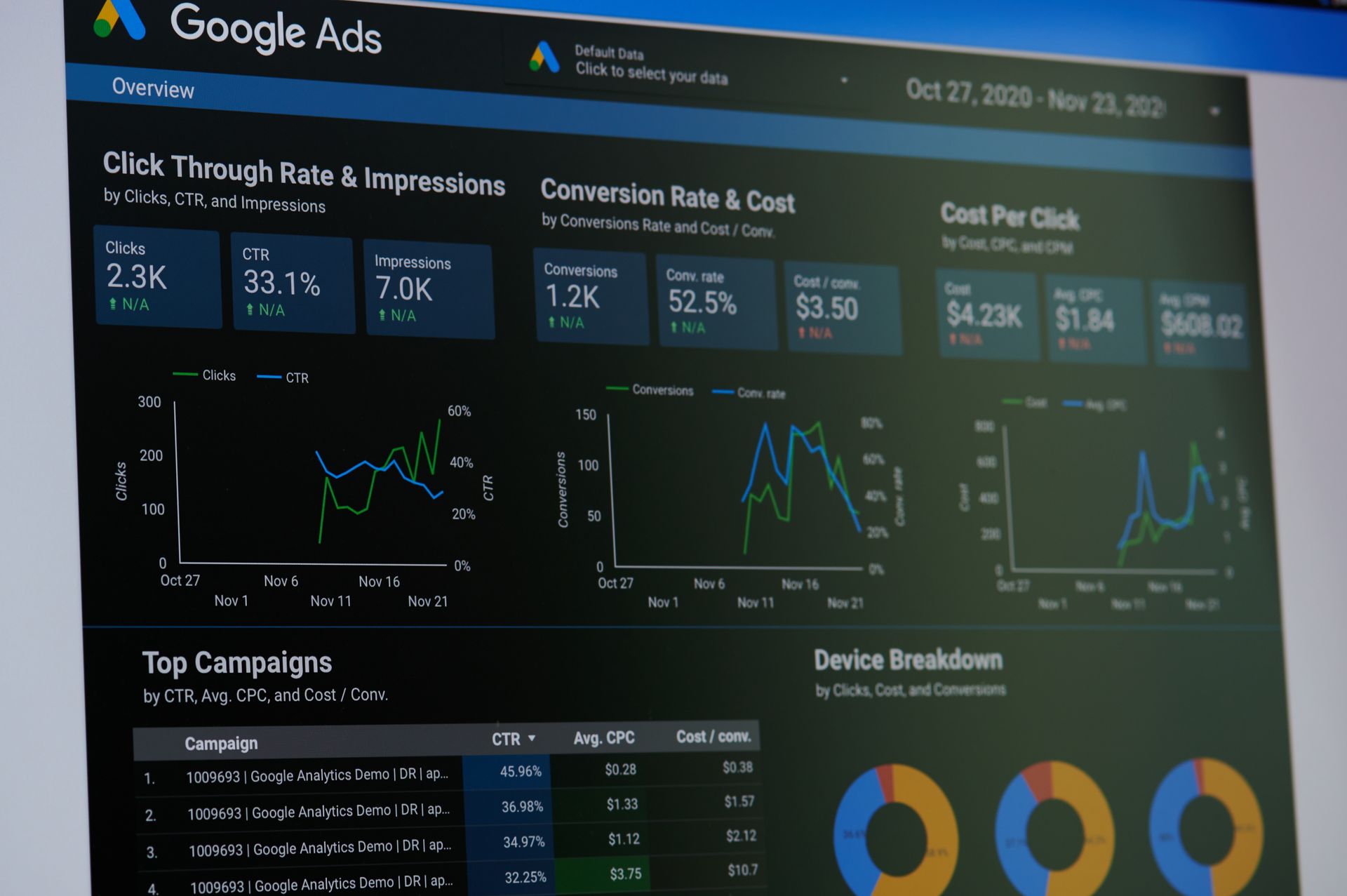
Google Ads provides detailed campaign performance data.
Businesses can evaluate metrics such as:
- Impressions
- Clicks
- Click-through rate
- Cost per click
- Conversions
- Cost per conversion
- Conversion value
With proper conversion tracking, advertisers can use this information to identify what's working and continually refine campaigns.
Quantifi Media is a Google Partner and provides Google Ads management focused on building and optimizing campaigns around business goals and measurable performance.
What Are the Limitations of Google Ads?
The biggest difference from organic traffic is cost.
With PPC, you're paying to participate in the advertising marketplace.
Competitive keywords can become expensive, particularly in industries where a new customer is highly valuable.
Campaign performance also depends on more than simply selecting a keyword and setting a budget.
Effective PPC requires attention to:
- Keyword strategy
- Search intent
- Ad copy
- Targeting
- Bidding
- Landing pages
- Conversion tracking
- Negative keywords
- Budget allocation
- Continuous optimization
And getting the click is only half the battle.
If users land on a confusing, slow, or unconvincing website, additional ad spend won't automatically solve the problem. That's why conversion rate optimization and strong landing pages can have such a significant impact on paid advertising profitability.
Is SEO Cheaper Than Google Ads?
It depends on how you measure cost.
SEO doesn't require you to pay Google for every organic click, but effective SEO still requires an investment.
You may need to pay for SEO professionals, content creation, website development, technical improvements, research, tools, and authority-building efforts.
Google Ads has both management and media costs because you're also funding the advertising budget itself.
Rather than asking which channel is simply "cheaper," a better question is:
Which channel produces the strongest return for the money we're investing?
A less expensive marketing channel isn't necessarily better if it fails to generate qualified leads or revenue.
The same principle applies to both SEO and PPC.
Focus on business results and return, not just the lowest upfront price.
Is SEO Better Than Google Ads for Long-Term Growth?
SEO often has an advantage when the goal is building sustainable organic visibility.
When you invest in a high-quality website, useful content, technical improvements, and authority, you're building digital assets your company owns.
Those assets can continue attracting visitors over time.
A strong organic presence can also reduce your dependence on paying for every website visit.
However, SEO visibility is never permanently guaranteed. Rankings can change as competitors, search behavior, websites, and algorithms evolve.
That's why SEO works best as an ongoing growth strategy rather than a one-time project.
Are Google Ads Better When You Need Leads Quickly?
Often, yes.
If speed is the priority, Google Ads usually has an advantage over SEO.
A new business, for example, may have almost no organic search visibility. Waiting for SEO to gain traction could mean missing opportunities in the meantime.
A paid search campaign can help the business begin competing for relevant searches much sooner.
That doesn't guarantee leads or sales. Campaign success still depends on competition, budget, targeting, ads, landing pages, your offer, and conversion strategy.
But Google Ads can provide faster access to search visibility than waiting for organic rankings to develop.
Should a New Business Start With SEO or Google Ads?
For many new businesses, using both can make sense.
Google Ads can help create immediate visibility while SEO builds a longer-term organic foundation.
Think of it this way:
Google Ads can help you compete now. SEO can help you build an asset for later.
A new business might launch a paid campaign to generate early leads while simultaneously:
- Optimizing its website
- Creating service pages
- Improving local SEO
- Building its Google Business Profile
- Publishing useful content
- Establishing online authority
As organic visibility grows, the company can evaluate both channels and adjust investment based on performance.
Can SEO and Google Ads Work Together?
Absolutely.
SEO and Google Ads aren't competing strategies. They can serve different purposes within the same marketing plan.
For example, a business might use Google Ads to target highly competitive commercial keywords while using SEO to build organic visibility across service pages, local searches, and informational topics.
Paid campaign data can also reveal useful information about search behavior and conversions.
Meanwhile, SEO content can help strengthen the website experience users encounter after discovering the brand.
A combined strategy can give your business opportunities for visibility across more parts of the search results and more stages of the buying journey.
Does Running Google Ads Help Your SEO Rankings?
No. Paying for Google Ads does not directly improve your organic rankings.
Google's advertising system and organic search results are separate.
Running ads can create additional brand exposure and website traffic, but buying Google Ads does not purchase better organic rankings.
This is an important distinction when deciding how to allocate your marketing budget.
SEO should be evaluated based on organic performance, while Google Ads should be evaluated based on paid campaign performance.
SEO vs. Google Ads: Which Should Your Business Choose?
Choose SEO when your priorities include building long-term organic visibility, strengthening your website's authority, developing useful content, reaching customers throughout their research process, and creating a sustainable organic search presence.
Choose Google Ads when you need targeted visibility quickly, want to promote a time-sensitive offer, are launching a new service, need to target specific geographic markets, or want to test and scale paid search campaigns based on measurable performance.
Consider SEO and Google Ads together when you want both short-term visibility and long-term growth.
There is no universal marketing mix that works for every company.
Your strategy should be based on your business model, goals, market, budget, timeline, and performance data.
Is SEO better than Google Ads?
Neither is universally better. SEO is generally better suited to building long-term organic visibility, while Google Ads can provide faster paid visibility. The right option depends on your business goals, budget, competition, and timeline.
Is SEO free compared with Google Ads?
Organic search clicks do not carry a direct per-click charge from Google, but professional SEO still requires investment in strategy, content, technical improvements, and ongoing optimization. Google Ads additionally requires an advertising budget.
How quickly can Google Ads work?
Eligible Google Ads campaigns can begin generating paid visibility after they are launched and approved. Actual leads and conversions depend on factors such as competition, budget, targeting, ads, landing pages, and the offer.
How long does SEO take to work?
SEO timelines vary substantially. Competition, website authority, technical health, content quality, location, and existing rankings can all affect how quickly improvements occur. SEO should generally be viewed as a long-term strategy rather than an instant source of traffic.
Should small businesses use SEO or PPC?
Small businesses can benefit from either strategy. SEO can build sustainable organic visibility, while PPC can provide faster targeted exposure. Businesses with sufficient resources may benefit from using both as part of a coordinated search strategy.
Does running Google Ads improve SEO rankings?
No. Paying for Google Ads does not directly improve organic search rankings. Google's paid advertising system and organic search results are separate.
Build a Search Strategy Around Your Business Goals
The SEO vs. Google Ads debate doesn't need a winner.
Both can be valuable.
SEO helps build long-term organic visibility and authority. Google Ads helps businesses compete for targeted paid visibility quickly. When they're strategically combined, each channel can do the job it's best suited to do.
Quantifi Media provides both search engine optimization and Google Ads management, allowing businesses to build an integrated search strategy instead of treating paid and organic marketing as separate worlds.
The goal isn't to pick the marketing channel with the best reputation.
It's to find the combination that produces the best results for your business.
Share this blog!